About
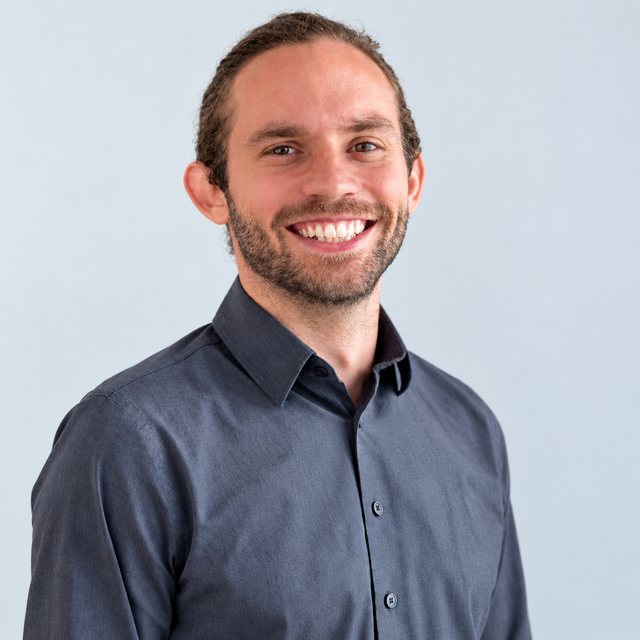
I am Lucas Thal, an imaging scientist first. I have built microscopes and run them in academic and industrial settings, designed the probes that go on them, and written the analysis that turns the images into numbers a program can act on. Around that I design, oversee and interpret the human-cell-model and in vitro assay work that decides whether a program moves. I work from San Diego, I have no wet lab of my own, and that is deliberate.
Neurocrine Biosciences, Senior Scientist 2021–2025 · PhenoVista Biosciences · Vanderbilt PhD, Chemical Biology · Lawrence Berkeley National Lab · Ten publications, 300+ citations · San Diego
What I do with a microscope
Imaging is the part of this practice I came up through, and the rest is built on it: optics and instrumentation, probes and panels, methodology, and analysis, from the dish to the 1536-well plate. The detail, link by link, is on the expertise page.
I have built the instrument, the assay, and the program.
Vanderbilt and Berkeley, 2015–2020
A PhD in Chemical Biology at Vanderbilt on single-particle tracking and super-resolution imaging of the dopamine transporter. I built microscopes to do it, and I made the probes that went on them: as a Research Affiliate at Lawrence Berkeley National Lab I bioconjugated fluorescent probes and designed ligand-conjugated probes for labeling neuronal proteins. Ten publications came out of that work, on single-molecule imaging, probe design and fluorophore photophysics, where every photon a fluorophore gives up before it bleaches or blinks off decides what you can measure.
PhenoVista Biosciences, 2020–2021 — the CRO side
Scientist II. I ran the high-content screening assay portfolio and led teams on phenotypic assay development and screening across multiple client engagements, spanning iPSC-derived and primary neural and non-neural cells, with MATLAB automation underneath the image analysis. I learned what sponsors ask for, and what they should have asked for.
Biopharma, 2021–2025 — the sponsor side
Senior Scientist. I was the lead biologist on a neuroimmunology program through hit-to-lead, and I contributed mechanism-of-action work to two programs that reached development-candidate nomination, one of which is now in Phase 1. I built iPSC neuron, astrocyte and microglia tri-culture high-content assays and the machine-learning image-analysis pipelines that read them, alongside human whole-blood biomarker assays. I designed and managed CRO studies from the sponsor side of the table. I built the internal scientific case for inflammasome biology as a therapeutic axis, and I have target-championing experience in neuroimmunology. I supported scientific diligence on external neuroimmunology assets for pharma business development.
Running programs, not only assays
The part of the work that is hardest to hire for is not the bench technique. It is owning the question. As lead biologist I set the go/no-go criteria, made the build-versus-outsource call assay by assay, wrote the study plans that CROs quoted against, and presented the science that a leadership team had to act on. I have sat on both sides of the CRO table, which is why the study plan I write is one a CRO can price and you can judge. Before graduate school I co-owned and managed a retail business for four years; that is where I learned to run a team, a budget and a customer conversation, and it is a large part of why running a practice feels familiar rather than novel.
Platforms
High-content imaging, live and ICC; flow cytometry; MSD; Luminex; ELISA; FLIPR; HTRF; fluorescence polarization; MEA; calcium imaging. Analysis in Python, CellProfiler and MATLAB.
For the assay families I do not claim, see the stated gaps on the expertise page. I refer those out without a fee.
Publications
Ten publications — five research articles, two reviews and three book chapters — on single-molecule imaging, probe design and fluorophore photophysics, cited more than 300 times. The full list is on Google Scholar.
Talk to me
The way in is the call. If you would rather write first, I am at lucas@thalamusbio.com.
Book an intro call Four quick questions and your contact details, then pick a time. A first conversation about your data, no pitch.